|
ANKH n°4-5, 1995/1996, pp. 184 -
213.
ANKH n°17,
2008,
pp. 72-85.
|
L e
maître du tombeau en tant qu'Horus fils d'Osiris
Réflexions sur le sens de la décoration murale des tombeaux de l'Ancien Empire en Égypte (2500-2100 av. J.-C.)
Résumé : Un grand nombre des scènes des chapelles funéraires des tombeaux de l'Ancien Empire montrent le maître du tombeau en action dans les fourrés de papyrus. Dans ces scènes, le maître du tombeau est comparé au dieu Horus, qui est né et élevé dans les fourrés de papyrus de Khemmis. La naissance et l'enfance d'Horus servent de modèle pour la résurrection du défunt ; la chapelle représente son Au-delà ; les scènes variées de la décoration tombale traitent ainsi des différents aspects de l'Autre-monde qui est habité par le maître du tombeau en tant qu'Horus, fils d'Osiris.
Abstract : The scenes of the papyrus thicket in the tombs of the Old Kingdom point out to a religious meaning of the tomb representations because the papyrus thicket is the mythical place of the birth and bringing up of Horus. In the sacramental explanation of this kind of scenes the tomb owner is compared with Horus who growed up in the papyrus thicket. His birth forms the pattern for the regeneration of the tomb owner in his new life in the hereafter. The remaining scenes in the tombs of the Old Kingdom relate to different aspects of this hereafter of a high official and show the tomb owner in various situations of his yonder life.
Zusammenfassung
:
Der Grabherr des Alten Reiches als Horus, Sohn des Osiris.
Überlegungen zum Sinn der Grabdarstellungen des Alten Reiches in Ägypten (2500-2100 v. Chr.).
Die Szenen des Papyrusdickichts in den Gräbern des Alten Reiches weisen auf eine religiöse Bedeutung der Grabdarstellungen hin. Das Papyrusdickicht ist nämlich der mythische Ort, an dem "Horus" geboren und aufgezogen worden ist. Der Grabherr wird in der sakramentalen Ausdeutung der Szenen mit diesem "Horus" des Papyrusdickichts verglichen. Seine Geburt bildet dabei die Voraussetzung für die Wiedergeburt des Grabherrn in neuer und kraftvoller Gestalt. Das Jenseits des Grabherrn, in das der Verstorbene nach seiner Wiedergeburt als "Horus" dann eintritt, ist der eigentliche Gegenstand der Grabdarstellungen und wird in den Bildern der Grabanlage unter verschiedenen Aspekten gezeigt.
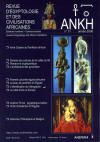
La
peau de panthère en Égypte ancienne et en Afrique
Résumé :
II est admis que les vêtements en peau de
panthère sont largement répandus dans toute l'Afrique. C'est
l’une des raisons pour laquelle on peut classer la peau de
panthère de la culture égyptienne comme un signe important
panafricain dont la source ne doit pas être nécessairement
localisée en Égypte. Dans l’Égypte de l'Ancien Empire (2700-2100
av. J.C.) la peau de panthère est une marque distinctive du rang
élevé de son porteur et peut indiquer l'appartenance à la
parenté royale. À l'Ancien Empire égyptien le propriétaire d'une
tombe se fait représenter dans un costume de peau de panthère
pour se procurer pour sa vie après la mort la possibilité d'être
un fonctionnaire de haut rang et d'être un membre de l'entourage
du roi de son époque.
he Leopard Skin in Ancient Egypt
and in Africa
Summary:
It is admitted that dresses made of
leopard skin are known from all over Africa. Therefore the
leopard skin dresses of Ancient Egypt belong to a panafrican
costume although its exact place of origin is unknown. In the
culture of Ancient Egypt the leopard clothes denominate the high
rank of its wearer. It is mainly connected with princes and
royalty. In wearing the costume made of leopard skin the
Egyptian tomb owner tries to declare himself as belonging to the
royal family and to be a prince in his afterlife.
|